You woke up this morning and before your eyes were fully open... your hand was already reaching for it.
You told yourself last night. "Tomorrow. Tomorrow is the day I stop."
And yet here you are. Again.
You are tired of the cough that wakes you up at 3am. The one that makes your chest sound like a wet engine trying to start. The one you try to muffle so your wife — or your children — don't hear you from the next room.
You have stepped out of so many family gatherings, church events, and office meetings just to "take a few minutes." People notice. They say nothing to your face. But you see it in their eyes.
"Is he still doing this?"
You have tried to quit. God knows you have tried. Maybe you went three days. Maybe even a week. Then something happened — a difficult phone call, a stressful workday, an argument — and before you could think, you were already lighting up again.
And then came the shame. That suffocating, heavy shame that sits on your chest heavier than the addiction itself.
Your partner is running out of patience. The children have started asking questions. Your doctor has warned you — probably more than once. You nod. You promise. And then the craving comes back like a wave and it swallows every promise you made.
You have spent money on patches. On gum. On online programmes. On prayers. On everything.
"Maybe this is just who I am," you've started to think. "Maybe I'm one of those people who just can't stop."
You are wrong.
And I need you to hear that clearly.
Drop everything you are doing now and listen to every word I'm about to say.
"Because I'm about to share with you a simple 30-day brain reset method that changed everything for me — and for hundreds of others who had completely given up hope."
Let me take you back to November 2017.
I was 29 years old. I had just started teaching at a government school in Ibadan. The pay was small, the stress was enormous, and somewhere between the marking of exercise books and the pressure of a new marriage, I picked up my first stick of cigarette at a friend's birthday in Bodija.
I told myself it was just once. Just that night.
Within three months, I was buying a full pack every two days.
My wife, Sola, didn't know at first. I was careful. I chewed mint after every stick. I washed my hands. I changed my shirt. But the body knows. The breath knows. And by the fourth month, she came to me one evening, sat down quietly beside me at the dining table, and said in a very soft voice:
"Tunde. I can smell it on you. How long?"
I felt like the floor had opened. I tried to lie. She just looked at me. That look a Yoruba woman gives you that is worse than shouting. Calm. Deeply disappointed.
That night, I swore on everything I held dear that I would stop.
And I meant it. With every part of me, I meant it.
But the next morning, the craving came. And it came like something alive — clawing at my chest, making my hands shake, filling my head with a noise I could not silence. By noon, I had smoked two sticks in the toilet at school.
Over the next three years, I tried everything I could find.
I bought nicotine patches from a pharmacy in Dugbe — the kind that cost me ₦4,500 for a week's supply. The patch helped for four days. Then my skin itched so badly I pulled it off in the middle of the night and reached for a cigarette by morning.
I tried nicotine gum. Chewed so much of it that my jaw hurt and my stomach began to revolt. It dulled the craving slightly — but the moment I stopped chewing, everything came rushing back twice as strong.
Someone at my church told me about a herbal mixture sold at Ojoo Market — a bitter dark liquid you mix with water and drink every morning. A woman in my congregation swore by it. I drank it for two weeks. All it did was give me stomach ache and a very complicated relationship with the bathroom.
I downloaded three different quit-smoking apps. They were motivating for about five days. Then life got busy, the notifications became annoying, and I deleted them all.
I went to see a private clinic doctor in Bodija who prescribed Varenicline tablets. They were expensive. They also gave me vivid, disturbing nightmares. I stopped after two weeks. The cigarettes remained.
I even fasted. Three-day fasting and prayer — no food, just water and black coffee and Bible verses about the body being a temple. On the fourth day I broke the fast with a cigarette. And I cried in my car on my way to work that morning, because I didn't know what else to try.
"Tunde, this thing will kill you slowly," my mother said during a phone call one Eid morning. "Ẹ jọ o, jọwọ fi silẹ." (Please, I beg you, leave it alone.)
Her voice broke. And so did something inside me.
Then came the visit to Epe.
It was December 2022. My wife's family was gathering in Epe for the naming ceremony of her nephew's newborn son. It was one of those beautiful, loud, joyful Yoruba naming ceremonies — music, food, children running everywhere, women in matching aso-oke.
At some point during the afternoon, I slipped away to the side of the compound to smoke. I thought I was alone.
I was not.
Seated on a low stool beneath a cashew tree was an elderly man. He had to be in his late seventies, at least. Deeply lined face. Very calm eyes. He was peeling an orange with unhurried hands and watching me with the kind of quiet observation that only old people can do without it feeling intrusive.
"So that's why you left the party," he said softly, in Yoruba-accented English. Not judgemental. Just observing.
I laughed awkwardly. "Old habit, sir."
"Old habits," he repeated, as if the words themselves were interesting to him. "I'm Dr. Bamidele Okonjo. Retired. Forty-one years in pharmacology. Twelve of those years spent specifically researching substance dependency at University College Hospital, Ibadan."
He pointed at the cigarette between my fingers without any drama and said, "You've tried to stop before."
It wasn't a question.
"Yes sir," I said. "Many times."
"Of course you have. Because willpower alone cannot beat a brain that has been rewired by years of chemical dependency. You are not weak, young man. You are dealing with a hijacked brain. And a hijacked brain needs a specific process to be reset — not discipline. Not prayer alone. Not patches. A daily, structured, step-by-step process."
I sat down on the ground near his stool. Something about this man made you want to listen.
For the next forty-five minutes, as the party continued a few metres away, Dr. Bamidele Okonjo changed my life.
He explained how addiction rewires the brain's dopamine pathways. How every cigarette teaches the brain that the only way to feel okay is through the substance. How willpower attacks the symptom — but the brain needs to be systematically re-trained, day by day, to restore its own natural balance.
"The brain is neuroplastic," he said, peeling another segment of orange. "It changed because of the addiction. And it can change back — but only through consistent, structured, daily input. Not random effort. Not hoping. A specific 30-day process where each day builds on the one before it."
He described the method in detail. The daily habit stacking. The craving management techniques. The nutritional support for brain chemistry. The way to use your body's own stress response to interrupt cravings in real time.
I honestly didn't believe it would work. It sounded too simple. Too logical. Too... quiet. I had expected something dramatic — something that would hurt, or require some extraordinary sacrifice.
"Simple is how the brain learns," he said, as if reading my scepticism. "The brain does not respond to drama. It responds to consistency."
I drove home from Epe that evening with a phone full of voice notes. I had asked Dr. Bamidele's permission to record him and he had agreed. He even sent me, later that week, a summary of the research papers he referenced — from the NIH, from NIDA, from the New England Journal of Medicine.
For the first four days of following the method, I noticed nothing. The cravings were still there. I was irritable. I questioned everything. I nearly quit the process at Day 3.
Then came Day 6.
I was sitting at my desk at school, preparing lesson notes for JSS 2, when a craving hit. The usual kind — the kind that normally made me stand up and walk toward the gate. Instead, I did the 5-Minute Craving Reset that Dr. Bamidele had described. I breathed. I grounded myself. I did the HALT check he had taught me.
And the craving... passed.
Not because I fought it. It just passed. Like a wave that came and went without breaking me.
I sat back in my chair and I was shaking. Not from withdrawal. From something I had almost forgotten how to feel: control.
By Day 12, I had gone four consecutive days without a single stick. The longest streak in eleven years.
By Day 21, the smell of cigarettes — which had always been comfort to me — had started to smell like exactly what it was. Smoke and chemicals. The craving had reduced from a roar to a whisper.
By Day 30, I was free.
I don't use that word lightly. Free. Not "managing." Not "resisting." Not "being strong." Just... free. The way you feel when something that had power over you for years suddenly... doesn't.
One Saturday evening — about six weeks after I completed the 30 days — Sola and I were sitting on the veranda after dinner. She was quiet for a long time. Then she turned to me and looked at me in a way she hadn't looked at me in years.
"Tunde," she said slowly, "you haven't smelled of it in a long time."
"Seven weeks," I told her.
She was quiet again. Then she reached across and held my hand.
"I'm proud of you," she said. "I was so scared I was losing you. To that thing."
My throat closed. I could not speak. I just held her hand.
She later said to me: "You look lighter. Like something you were carrying has been put down."
And that was the most accurate thing anyone has ever said about what this process felt like.
After that, I shared what I had learned with three people in my compound who were struggling with the same thing — two men who smoked and one young man who had been using codeine-laced cough syrup every day for two years.
Within 30 days, all three of them had made significant, real progress. One of the men — Biodun, a 44-year-old auto mechanic — sent me a WhatsApp message on his Day 28: "Tunde, I don't know what kind of magic this thing is but my wife cooked me ogbono soup yesterday and called me 'my husband' again for the first time in two years."
The young man who had been on codeine cough syrup — by Day 21, he had cut down from three bottles a day to zero. His mother called me crying.
And a colleague at school — a woman who had been secretly vaping in the staff toilet for four years — completed the 30 days and came to tell me with tears in her eyes: "Tunde, I feel like myself again. I did not know how much of myself I had given away to that thing."
After I had helped over 40 people personally — most by WhatsApp, some in person — I realised I could not keep doing this one person at a time.
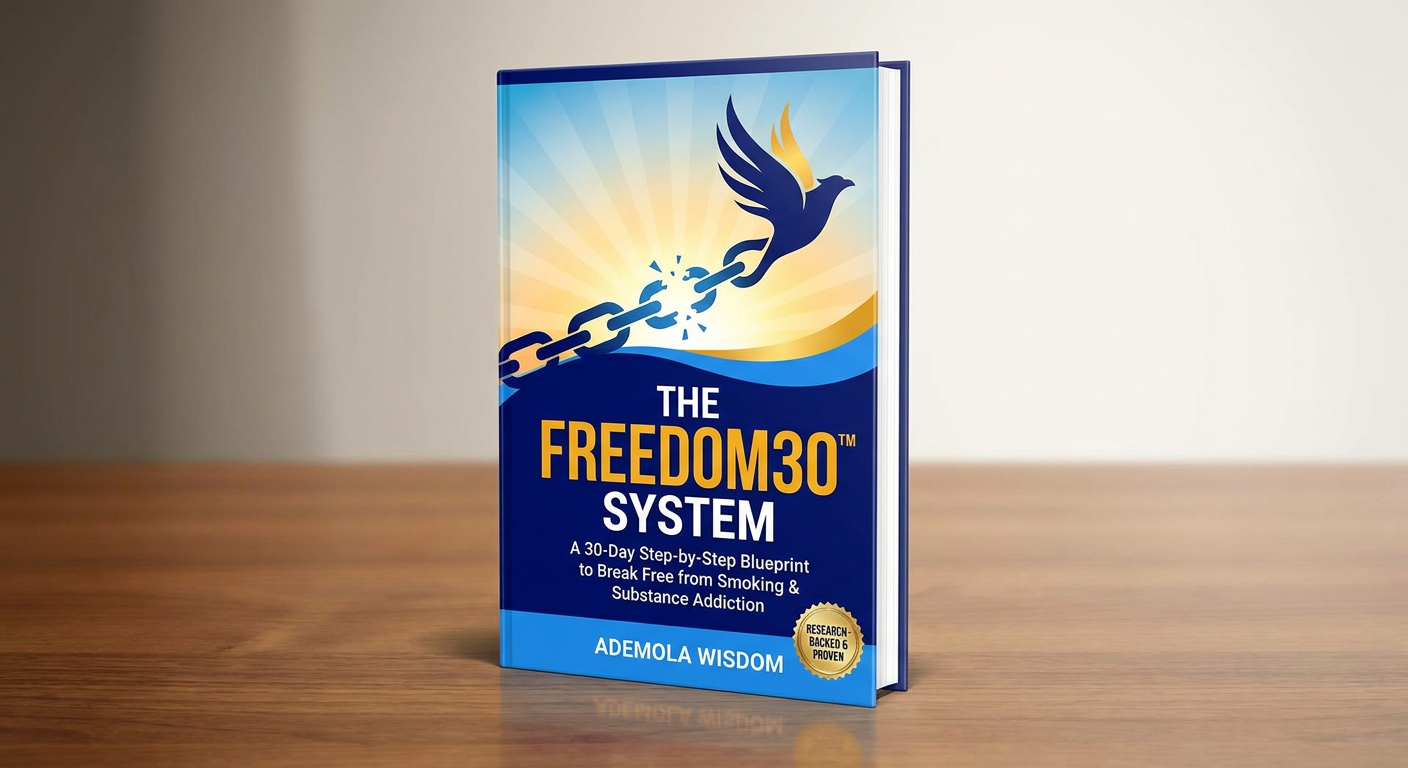
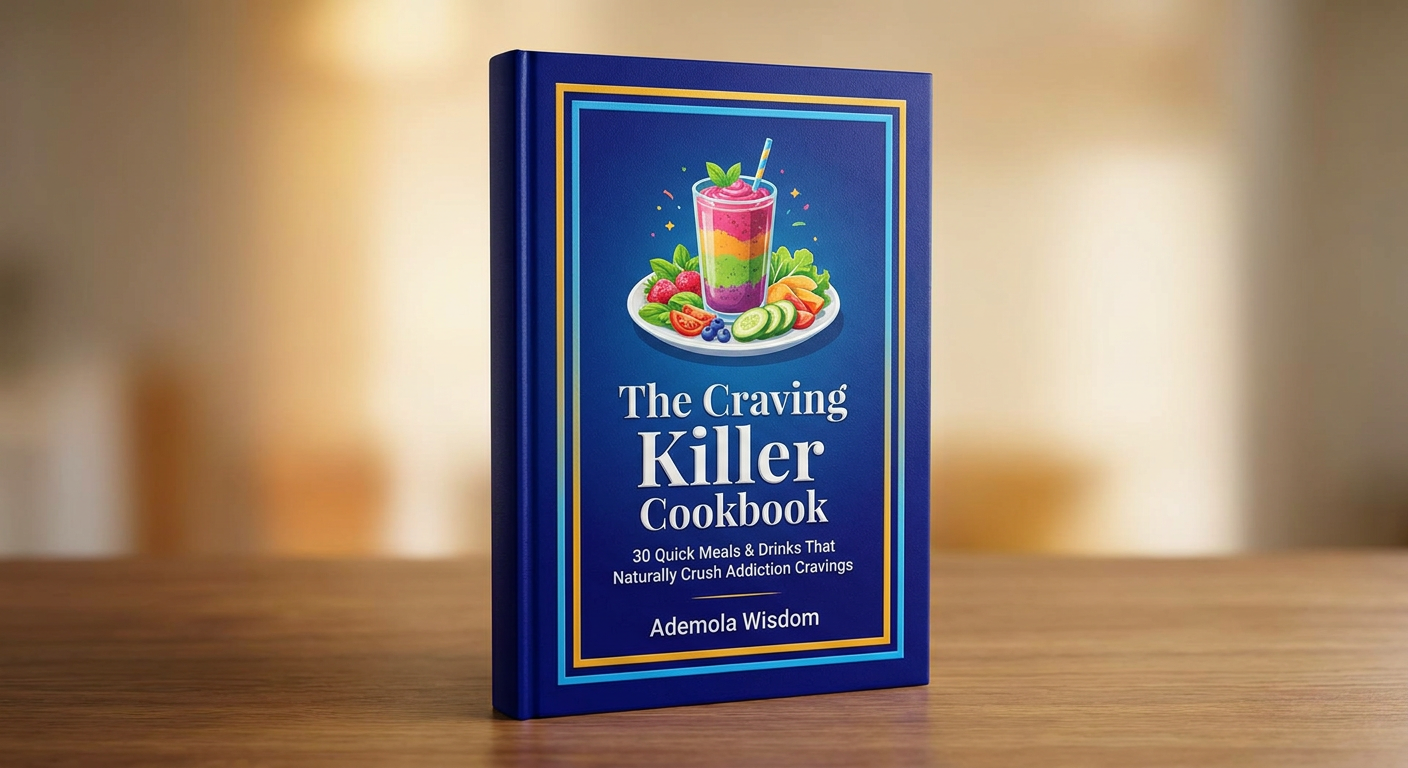
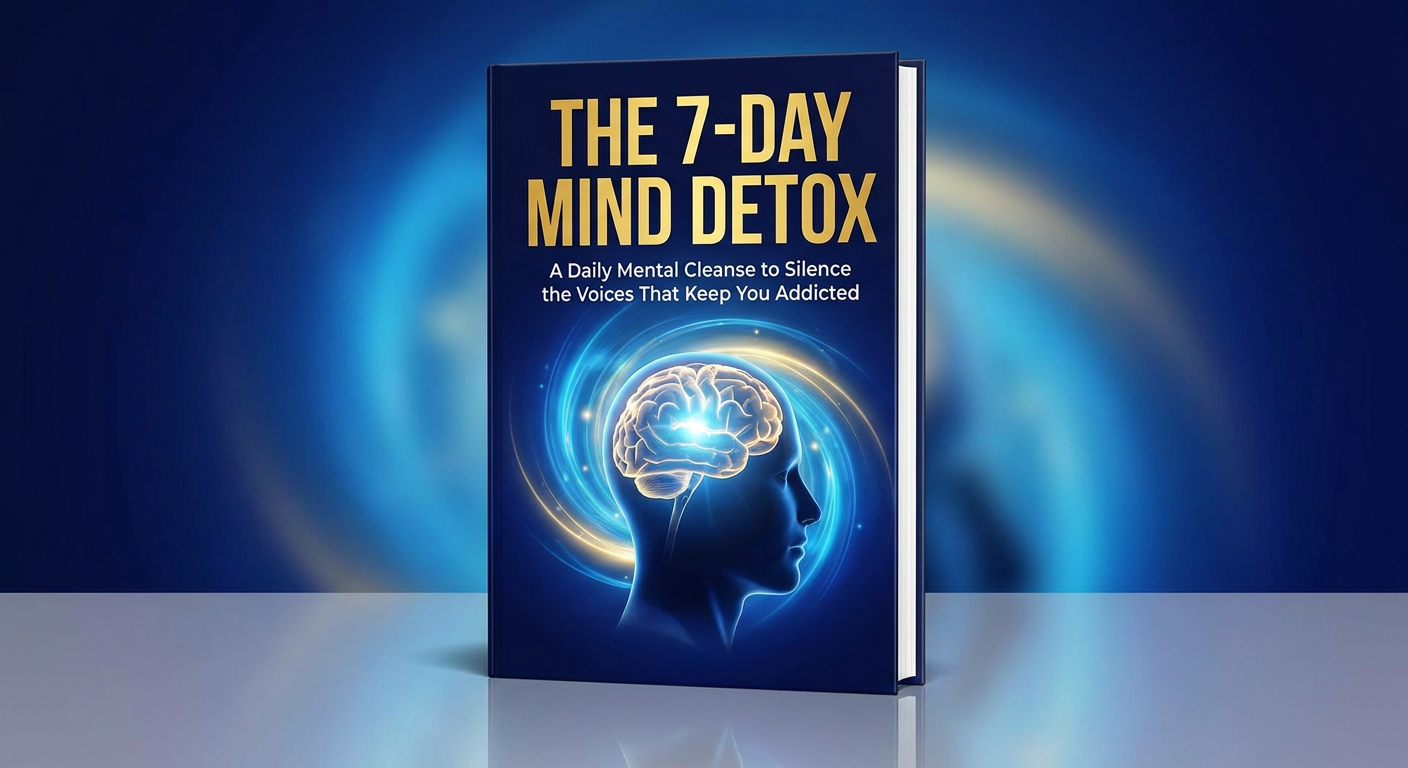
So I packaged everything.
🛡️ 30-Day Money-Back Guarantee | Instant Digital Delivery | Works on Any Phone



💭 Share Your Experience (Comments)